

Evidence & Publications

Research & Evidence Library.

Empirical working papers, academic literature reviews, and policy analyses examining the intersection of vulnerable population protection, sensory well-being, and safe AI care technologies.

OFFICIAL WHITEPAPER · 2026 EDITION

IAICA Global Whitepaper: Safe, Compassionate AI for Vulnerable Populations

A civilizational manifesto and operational framework for the era of longevity. Free to read and print.

Read Whitepaper (HTML / Print) →

All Research Briefs & Dispatches

Classified into Original Working Papers, Literature Reviews, News Summaries, and Commentaries.

33 publications indexed
AI in Medicine: Replacing Physicians or Freeing Clinical Judgment
News Summary

AI in Medicine: Replacing Physicians or Freeing Clinical Judgment

A presentation by Richard Low, MD, at the Association of Yale Alumni in Medicine alumni weekend on October 3, 2026, argues that medical artificial intelligence should be judged less by how well it imitates physicians than by how well it supports their clinical reasoning. Dr. Low distinguishes transcription of a clinical encounter from understanding what physicians know, think, and conclude, and warns that technology has often forced clinicians to adapt to its demands. Drawing on clinical practice and medical software development, he proposes reversing that relationship to reduce administrative burden and preserve professional autonomy.

Curated by IAICA Editorial Desk Read Analysis →

JMIR Briefs Examine AI Screening, GLP-1 Ads and Postpartum Psychosis Detection
News Summary

JMIR Briefs Examine AI Screening, GLP-1 Ads and Postpartum Psychosis Detection

JMIR Publications has released five News and Perspectives features surveying current digital health developments, ranging from artificial intelligence tools for clinical screening and resuscitation training to the psychological consequences of weight-loss advertising. The collection documents an AI system in Brazil that flags possible unreported gender-based violence, evidence on how patients judge AI-assisted clinical communication, and early work on whether consumer wearables can surface subtle behavioral signals of postpartum psychosis. Taken together, the features raise a common question for health systems: how to capture algorithmic efficiency without displacing clinical accountability, informed consent or the human relationship at the centre of care.

Curated by IAICA Editorial Desk Read Analysis →

Microsoft AI Exceeds Doctors' Accuracy in Complex Diagnosis, Study Finds
News Summary

Microsoft AI Exceeds Doctors' Accuracy in Complex Diagnosis, Study Finds

A newly reported study indicates that a Microsoft artificial intelligence system diagnosed complex medical cases more than twice as accurately as doctors. The finding places comparative clinical reasoning and diagnostic support at the center of debate over AI in care. Because available reporting provides only the headline result, health systems should treat it as a signal for structured evaluation rather than immediate adoption. Implications for eldercare, rehabilitation and specialized care are substantial but conditional on workflow integration, clinician oversight and validation.

Curated by IAICA Editorial Desk Read Analysis →

Canadian AI Healthcare Firms Target Data, Imaging and Precision Therapy
News Summary

Canadian AI Healthcare Firms Target Data, Imaging and Precision Therapy

Three Canadian AI healthcare companies show how machine learning is embedded in laboratory data capture, MRI-guided ablation and surgical margin visualization. Telescope Innovations, Profound Medical and Perimeter Medical Imaging AI report revenues of about CA$7.3 million, $19 million and $2 million, with market values near CA$28.7 million, CA$304 million and CA$29.9 million. Their prospects depend less on general AI enthusiasm than on unresolved funding, hospital purchasing behavior and adoption conditions. For caregiving, the cases clarify where AI may support precision and recovery, and where evidence, privacy and regulatory safeguards remain essential.

Curated by IAICA Editorial Desk Read Analysis →

FDA Clears AI Atrial Fibrillation Detection in Masimo Radius VSM Monitor
News Summary

FDA Clears AI Atrial Fibrillation Detection in Masimo Radius VSM Monitor

Danaher, the US-based life sciences group, has obtained US Food and Drug Administration clearance for an artificial intelligence-enabled atrial fibrillation detection feature in its Masimo subsidiary's Radius VSM wearable monitor. The function is intended for acute care settings, where it turns a hospital-grade wireless monitor into a software-rich clinical service. The approval extends Danaher's advanced diagnostics portfolio into algorithmic cardiac surveillance, although clinical and commercial value will depend on clinician adoption, integration with hospital information systems and validation across patient populations. This report summarises the development and its implications for technology-assisted care.

Curated by IAICA Editorial Desk Read Analysis →
OpenEvidence Accuracy Varies by Task, Studies Show No Single Score
News Summary

OpenEvidence Accuracy Varies by Task, Studies Show No Single Score

A peer-reviewed evaluation of OpenEvidence reports 89.6% accuracy on 500 MedQA questions, 62.6 points on a 100-point HealthBench rubric, and a 3.24 out of 4 mean clinician rating on 99 non-refusal answers. A separate non-peer-reviewed pilot found 31% mean accuracy for quick search and 39.5% for Deep Consult on 100 complex scenarios, a difference that was not statistically significant. Because these results use different tasks, samples and measures, they do not yield a single universal accuracy score for medical AI or a definitive ranking for routine clinical use.

Curated by IAICA Editorial Desk Read Analysis →

Analysts See Valuation Gap Narrowing for Canadian Health AI Stocks
News Summary

Analysts See Valuation Gap Narrowing for Canadian Health AI Stocks

The analysis examines a 2026 venture capital assessment that health technology equities trade at a 10% to 20% discount to cloud software peers, and the two Canadian listings that analyst coverage has placed within that valuation argument. WELL Health Technologies is framed around clinic and healthcare software growth, divestiture of U.S. assets and a C$7.00 target; HEALWELL AI is framed around preventative-care data platforms and a C$4.50 target. The report separates the investment case from the clinical case, noting where patient-identification tools may support earlier intervention in eldercare and chronic disease management.

Curated by IAICA Editorial Desk Read Analysis →

Investment Case Builds for AI-Driven Platforms Across the Medical Sector
News Summary

Investment Case Builds for AI-Driven Platforms Across the Medical Sector

An investment assessment of Doximity (DOCS), summarized on 21 October 2026, frames sustained demand for AI-driven platforms in the medical sector as the basis for a longer-term buy position. The argument rests on sector-level demand rather than near-term performance, and the published summary discloses no adoption metrics, pricing data or financial forecasts. For caregiving organizations, the item functions as a demand signal rather than a procurement recommendation: clinician-facing AI platforms are increasingly assessed on workflow relief, coordination and oversight burden. Governance questions concerning clinical accountability, health-data protection and equitable access remain unresolved.

Curated by IAICA Editorial Desk Read Analysis →

Language Models Show Restraint on Low-Value Care, Falter in Clinical Gray Areas
News Summary

Language Models Show Restraint on Low-Value Care, Falter in Clinical Gray Areas

A study by researchers at Ben-Gurion University of the Negev and Clalit Health Services, published in the Annals of Internal Medicine, evaluated six large language models from Google, Anthropic and OpenAI on decisions to test, treat or refrain. The models recommended unnecessary intervention in just 5.4% of cases where restraint was warranted and withheld indicated care in 0.6%. Accuracy deteriorated sharply on two contested questions: incidental small thyroid nodules and routine electrocardiograms for low-risk patients. Performance also diverged widely between models on cases without clinical consensus.

Curated by IAICA Editorial Desk Read Analysis →
Korean AI Healthcare Developers Target Overseas Screening Networks
News Summary

Korean AI Healthcare Developers Target Overseas Screening Networks

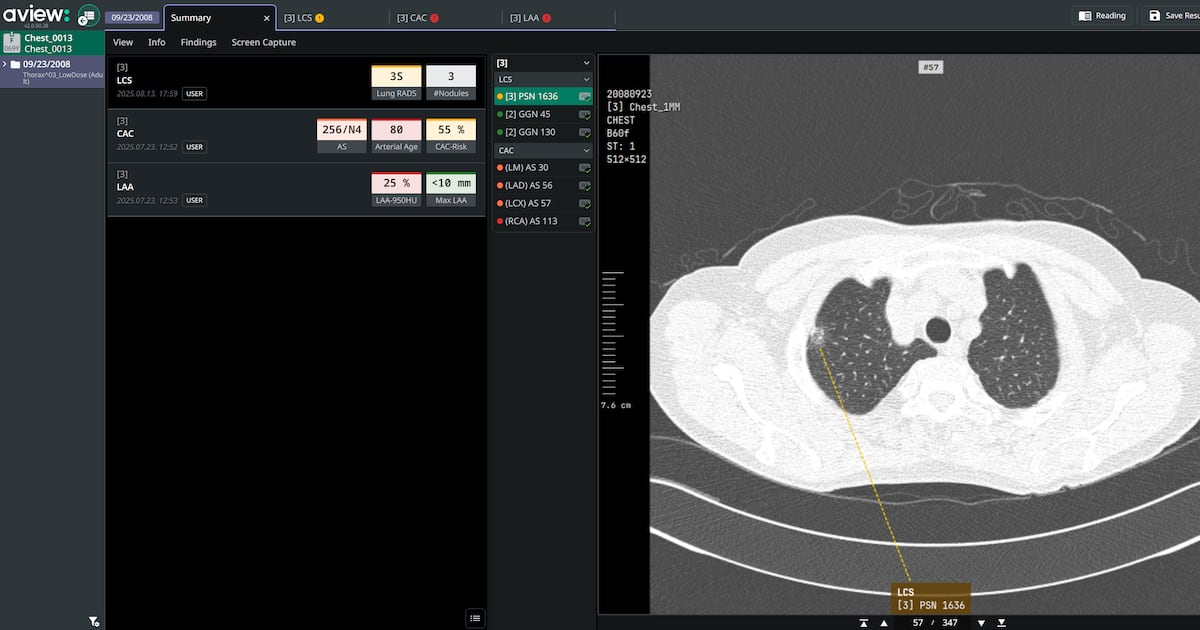
Korean developers of clinical artificial intelligence are shifting their commercial attention from domestic deployments toward screening networks in overseas markets. The move reflects a search for imaging volume, standardized protocols and the structured outcome data that underpin clinical validation. Realizing it depends less on model accuracy than on interoperability with existing information systems, device registration and conformity assessment in each jurisdiction, procurement rules and reimbursement. For eldercare, the indirect gains are shorter time-to-diagnosis and better continuity between detection and community care, subject to external validation and clear clinical accountability.

Curated by IAICA Editorial Desk Read Analysis →

Medical AI Moves Beyond Diagnosis Into Drug Discovery and Virtual Screening
News Summary

Medical AI Moves Beyond Diagnosis Into Drug Discovery and Virtual Screening

Medical artificial intelligence is extending beyond image analysis and diagnostic support into computational drug discovery and molecular screening. The AlphaFold database of more than 200 million predicted protein structures is giving researchers a broader basis for exploring molecular interactions, while biotechnology companies are testing AI-derived candidates for rare diseases. Recursion Pharmaceuticals has reported encouraging Phase 1b/2 results for REC-4881 in familial adenomatous polyposis, a rare inherited condition. The emerging ecosystem includes firms supplying simulation infrastructure and others developing their own drug candidates, with computational predictions still requiring laboratory validation.

Curated by IAICA Editorial Desk Read Analysis →

Oracle and AstraZeneca Partner on AI-Driven Clinical Research Data
News Summary

Oracle and AstraZeneca Partner on AI-Driven Clinical Research Data

Oracle and AstraZeneca have announced a partnership to advance AI-enabled healthcare solutions built on real-world data and clinical research. The collaboration targets two functions: identifying eligible participants for clinical trials and accelerating evidence generation from real-world datasets. Both companies intend to link research outputs into care delivery workflows across several therapeutic areas, including chronic and complex diseases. The agreement extends Oracle's AI-ready cloud and database infrastructure into regulated healthcare and adds a data-intensive use case to its AI workload pipeline, though it does not resolve outstanding questions about capital expenditure or contract conversion.

Curated by IAICA Editorial Desk Read Analysis →

BYU Alumna Builds AI Diagnostics Start-Up for Brazil's Public Hospitals
News Summary

BYU Alumna Builds AI Diagnostics Start-Up for Brazil's Public Hospitals

Ethos Serviços de Saúde, a Brazilian health technology startup led by Brigham Young University neuroscience graduate Isabella Roque, is applying artificial intelligence across the clinical process of the Sistema Único de Saúde, on which roughly 72 percent of the population depends. The company has formed a joint venture with Hospital Erasto Gaertner and Hospital das Clínicas and supports a global healthcare internship that pairs clinical placements with innovation projects. The model raises questions of local validation, clinician authority over triage and data protection in a system with limited alternatives for patients.

Curated by IAICA Editorial Desk Read Analysis →

ECGI Holdings Completes Avanta Acquisition to Build AI-Enabled Care Platform
News Summary

ECGI Holdings Completes Avanta Acquisition to Build AI-Enabled Care Platform

ECGI Holdings (USOTC:ECGI) has completed its acquisition of Avanta Group, an all-stock transaction that places health plan development, medical-network administration, technology services and artificial intelligence capabilities within one holding company. The deal issued 17,160,000 Series A Voting Convertible Preferred shares, 60 percent of which vested at closing. Avanta Health Plan intends to enter Medicare Advantage, commercial and individual markets but has not obtained the regulatory approvals required to operate or enroll members. The company also reports elimination of a $2.556 million convertible obligation.

Curated by IAICA Editorial Desk Read Analysis →

Health Data Partnerships and Privacy Gaps: Ten Healthtech Firms to Watch
News Summary

Health Data Partnerships and Privacy Gaps: Ten Healthtech Firms to Watch

A multi-year agreement between Google Health and Flo Health, announced on 12 October 2026, links cycle-tracking data to wearable readings for premium subscribers from 2027, three days before a claims window closed in a $59.5 million settlement over alleged non-consensual data sharing, with Google to contribute $48 million. The juxtaposition frames a broader review of ten health technology companies that combine clinical artificial intelligence with explicit privacy safeguards, including South Africa's AI Diagnostics and its tuberculosis screening tool, and Ourself's hormonal health platform. IAICA monitors such developments for implications in caregiving settings.

Curated by IAICA Editorial Desk Read Analysis →

British AI Healthcare Stocks Show Revenue Growth as Sector Attention Shifts
News Summary

British AI Healthcare Stocks Show Revenue Growth as Sector Attention Shifts

A UK-focused equity screen has highlighted three listed healthcare companies integrating artificial intelligence into their operations, reporting revenue growth of up to 16 percent. Haleon applies a Microsoft-backed data partnership to consumer health brands; Abingdon Health links rapid lateral flow tests to smartphone-based digital interpretation; AstraZeneca embeds AI in pharmaceutical research and development. The exercise follows pronounced volatility in AI-related equities, which has directed attention toward headline movers. For caregiving policy audiences, the developments indicate where diagnostic decentralization and consumer health data converge, and where validation, consent and regulatory clearance remain preconditions rather than afterthoughts.

Curated by IAICA Editorial Desk Read Analysis →

Three Canadian AI Healthcare Stocks Target Clinical Adoption
News Summary

Three Canadian AI Healthcare Stocks Target Clinical Adoption

Three Canadian healthcare artificial intelligence companies are attracting attention as investors shift from broad data-centre expansion toward focused clinical use cases. Telescope Innovations supplies automated reaction sampling and AI-ready laboratory tools for pharmaceutical research; Profound Medical develops MRI-guided, robotically controlled tissue ablation systems; and Perimeter Medical Imaging AI provides intraoperative optical coherence tomography for breast cancer margin assessment. Their reported revenues remain modest and geographically concentrated, while clinical adoption, reimbursement and regulatory validation will determine whether these technologies improve care delivery and support caregivers without overstating present evidence.

Curated by IAICA Editorial Desk Read Analysis →
Engineering Trustworthy Healthcare AI: From Data to Clinical Decisions
News Summary

Engineering Trustworthy Healthcare AI: From Data to Clinical Decisions

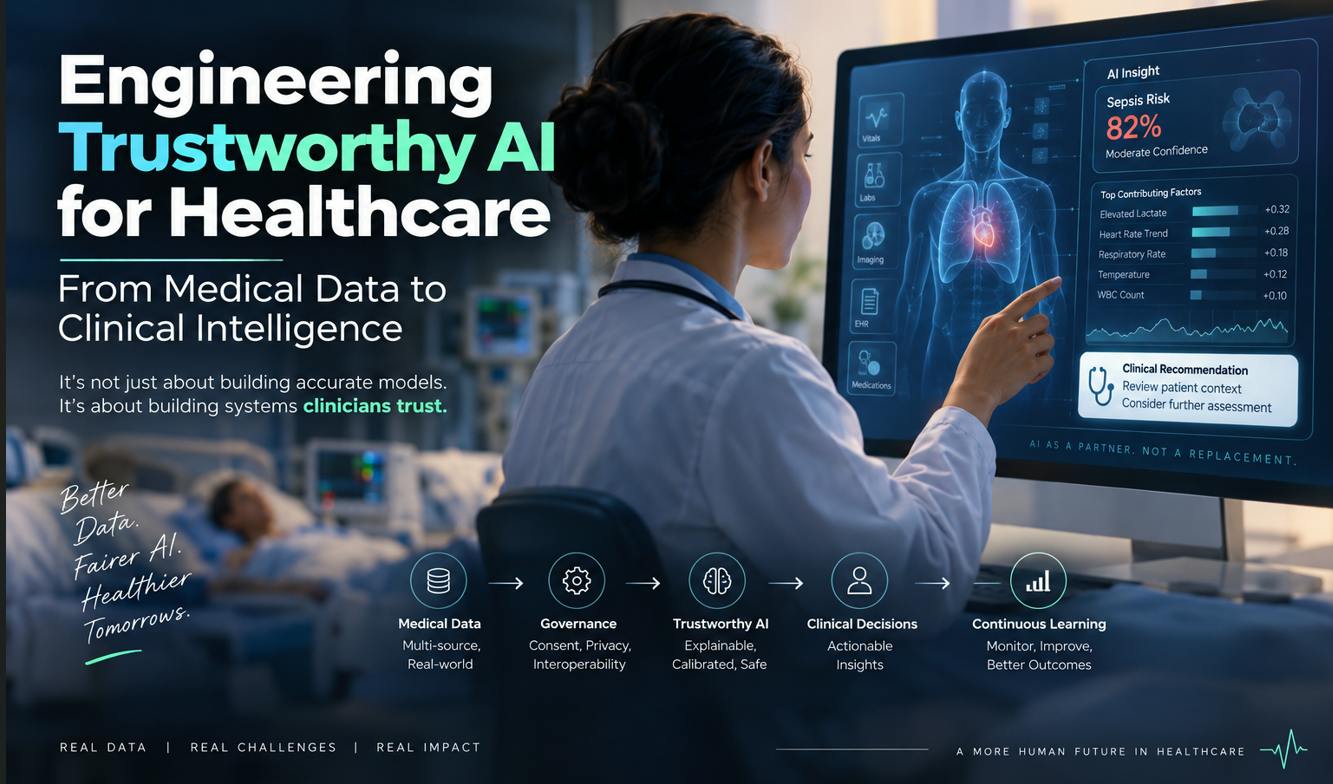
A practitioner review of healthcare AI argues that clinical trust is an architectural property, not a model metric. A sepsis prediction system with acceptable AUC and calibration went unused because its alerts fired too often, illustrating a persistent gap between prediction and decision. The account traces the problem to fragmented records, drifting timestamps, inconsistent units, and consent limits often discovered late. It recommends treating de-identification, FHIR normalization, lineage tracking, consent binding, and post-deployment feedback as core infrastructure, so outcomes, clinician overrides, and drift signals inform governance and retraining rather than leaving deployment as a finish line.

Curated by IAICA Editorial Desk Read Analysis →
AI Healthcare Business Models Highlight Clinical and Workforce Uses
News Summary

AI Healthcare Business Models Highlight Clinical and Workforce Uses

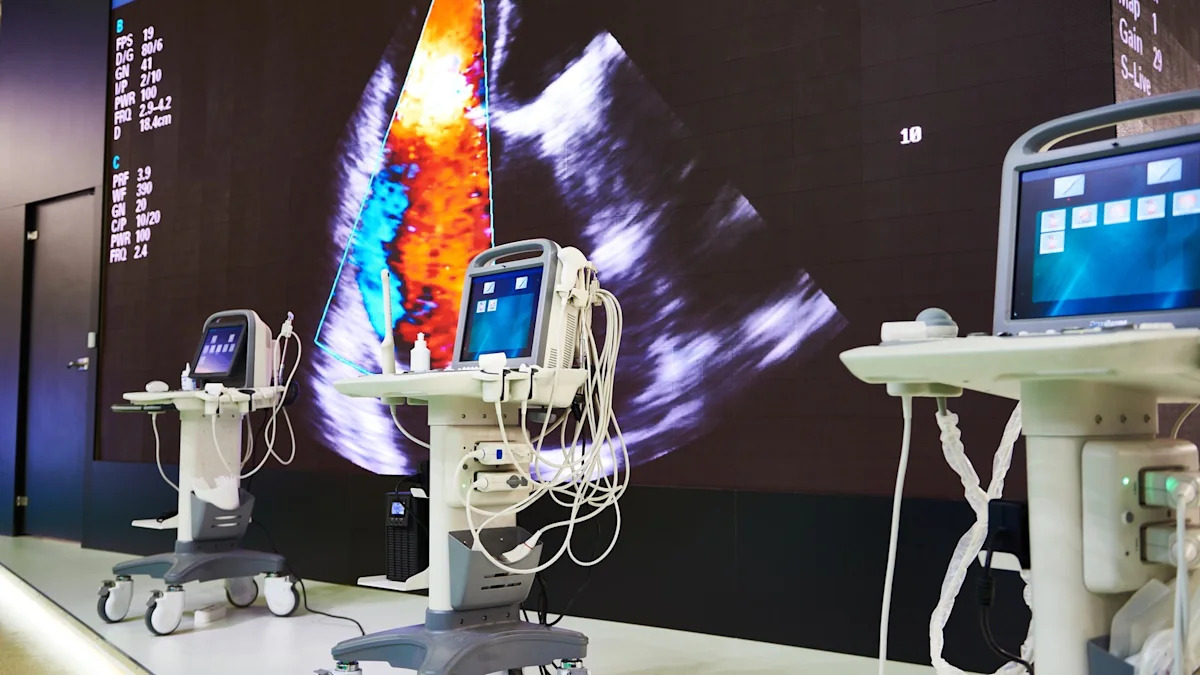
A market analysis examines three AI-enabled healthcare businesses: CeriBell's point-of-care EEG seizure detection, HealthStream's clinical competency and workforce software, and CorVel's claims-audit and care-management platforms. It frames these models against Anthropic's projection that AI could raise US economic output by nearly 50 percent by 2030. The report emphasizes hospital protocol-driven EEG utilization, migration to higher-margin subscription workforce tools, and automated claims review. For caregiving policy, the cases show how clinical decision support, credentialing, and payment integrity may reshape capacity, while unresolved cost pressures and governance requirements remain central to adoption.

Curated by IAICA Editorial Desk Read Analysis →

Audit Exposes Label and Split Flaws in Public Thyroid AI Dataset
News Summary

Audit Exposes Label and Split Flaws in Public Thyroid AI Dataset

A new audit in BMC Medical Imaging examines a widely used public thyroid ultrasound and cytology archive, finding contradictory labels and evaluation practices that can complicate reported diagnostic performance. The archive contains 387 ultrasound images and 1,332 fine-needle aspiration cytology blocks. Nine ultrasound images appear under both benign and papillary carcinoma labels across 19 files. Under case-level cross-validation, cytology ensemble AUROC reached 0.958 and ultrasound ensemble 0.768. Image-level splitting with 99.8 percent case contamination changed AUROC only marginally, prompting scrutiny of shortcut learning and non-anatomical image cues.

Curated by IAICA Editorial Desk Read Analysis →

Market Evaluation and Financial Tracking of Agilent Technologies Inc
News Summary

Market Evaluation and Financial Tracking of Agilent Technologies Inc

Recent financial tracking and market quotation data for Agilent Technologies Inc provide essential metrics for stakeholders observing the broader technology and life sciences sector. Such market performance indicators reflect ongoing economic evaluations across enterprises developing specialized analytical instrumentation and diagnostic tools, which indirectly support foundational research in biotechnology, health monitoring systems, and digital health infrastructure.

Curated by IAICA Editorial Desk Read Analysis →

AI Is Not the Strategy: Knowing Where to Deploy It Defines Value
News Summary

AI Is Not the Strategy: Knowing Where to Deploy It Defines Value

Clinical leaders argue that artificial intelligence is not itself a health system strategy; the strategic decision lies in identifying where in the care pathway the technology should be applied. Writing in the clinical literature, a hematology professor from Cairo University and the chief medical informatics and artificial intelligence officer at UC Irvine frame deployment choice, not model acquisition, as the governing question. For eldercare and rehabilitation providers, the message is that governance, workflow fit and measurable outcomes should determine adoption, with disclosure of commercial relationships treated as a baseline requirement.

Curated by IAICA Editorial Desk Read Analysis →

JAMA Network to Launch AI Journal in 2027 as UMass Modernizes Data
News Summary

JAMA Network to Launch AI Journal in 2027 as UMass Modernizes Data

JAMA Network has announced JAMA AI, a fully online journal covering artificial intelligence and computational tools across clinical care, to launch in early 2027 under inaugural editor Roy Perlis, M.D., MSc. Separately, UMass Memorial Health has begun a multi-year data modernization initiative with Microsoft and Accenture, replacing siloed reporting systems with unified cloud-based analytics and agentic AI workflow tools. Elation Health has added automated payment posting for primary care billing. The three developments illustrate converging institutional attention to clinical AI governance, data infrastructure, and administrative burden reduction.

Curated by IAICA Editorial Desk Read Analysis →

UCHealth Outlines Change Management and ROI Tracking for AI Deployments
News Summary

UCHealth Outlines Change Management and ROI Tracking for AI Deployments

UCHealth has publicly addressed two operational pillars of artificial intelligence adoption in healthcare: structured change management and return on investment (ROI) tracking. The development signals that health systems are moving beyond pilot enthusiasm toward disciplined implementation, governance, and measurable outcomes. While specific metrics and methodologies remain undisclosed in available material, the focus itself is instructive for care providers, technology vendors, and policymakers. Effective AI integration depends on workflow redesign, workforce readiness, and continuous evaluation. For eldercare and specialized care, these practices will determine whether AI tools support clinicians and caregivers safely, equitably, and sustainably.

Curated by IAICA Editorial Desk Read Analysis →

Catalio Capital Targets $500 Million Fund for AI Healthcare Startups
News Summary

Catalio Capital Targets $500 Million Fund for AI Healthcare Startups

Catalio Capital Management, a New York investment firm founded in 2020 with partial backing from KKR & Co. since 2023, is seeking $500 million for a fund dedicated to companies combining artificial intelligence with biomedicine and clinical care. The raise, reported on 15 October 2026 and still in progress, would be the firm's second in roughly 16 months. It follows a Nexus Fund IV close above $400 million in mid-2025 and more than $325 million for a life sciences private credit vehicle in early 2026. Catalio manages approximately $2 billion.

Curated by IAICA Editorial Desk Read Analysis →

Catalio, backed by KKR, seeks $500 million for AI-healthcare investments
News Summary

Catalio, backed by KKR, seeks $500 million for AI-healthcare investments

The announcement that Catalio, a healthcare investment firm backed by KKR, is seeking $500 million for artificial intelligence healthcare deals places a substantial private capital target against a sector still working out its evidence, reimbursement and governance frameworks. The sum is substantial by the standards of early-stage healthcare technology financing. For the caregiving sector, the significance lies less in the headline figure than in determining which tools reach clinical evaluation and procurement. The report examines the market context, the eldercare and rehabilitation implications, and the accompanying ethical and regulatory considerations.

Curated by IAICA Editorial Desk Read Analysis →

KKR-Backed Catalio Seeks $500 Million for AI-Healthcare Deals
News Summary

KKR-Backed Catalio Seeks $500 Million for AI-Healthcare Deals

Catalio, a firm backed by KKR, is seeking $500 million for AI-healthcare deals, signalling continued private-market interest in artificial intelligence applications across health services. The development, dated 15 October 2026, centres on capital formation rather than a disclosed clinical or product milestone. For caregiving systems, such investment may influence the availability of decision-support, monitoring, and administrative tools, but deployment will depend on evidence, regulatory clearance, data protection, and equitable access. Policy observers monitor these trends because they shape the infrastructure and governance of AI-supported care without determining clinical outcomes on their own.

Curated by IAICA Editorial Desk Read Analysis →

Indian PM Recognises VIT Chennai Startup's AI Health Platforms
News Summary

Indian PM Recognises VIT Chennai Startup's AI Health Platforms

Prime Minister Narendra Modi recognized the artificial intelligence healthcare technologies developed by MEDxAI Innovations Pvt Ltd, a deep-tech startup incubated at Vellore Institute of Technology Chennai, during the inauguration of the Porur Metro Rail project. The startup's chief executive, Dr Sheena C Pravin, presented Cervilens, an AI tool for cervical cancer pre-screening, and Quantum PharmX, an AI platform for drug discovery through molecular analysis and genomic profiling. MEDxAI, founded by Dr Sheena C Pravin and Dr Reena Monica P, was selected for the iAccelerate Programme facilitated by iTNT Hub in June 2026.

Curated by IAICA Editorial Desk Read Analysis →
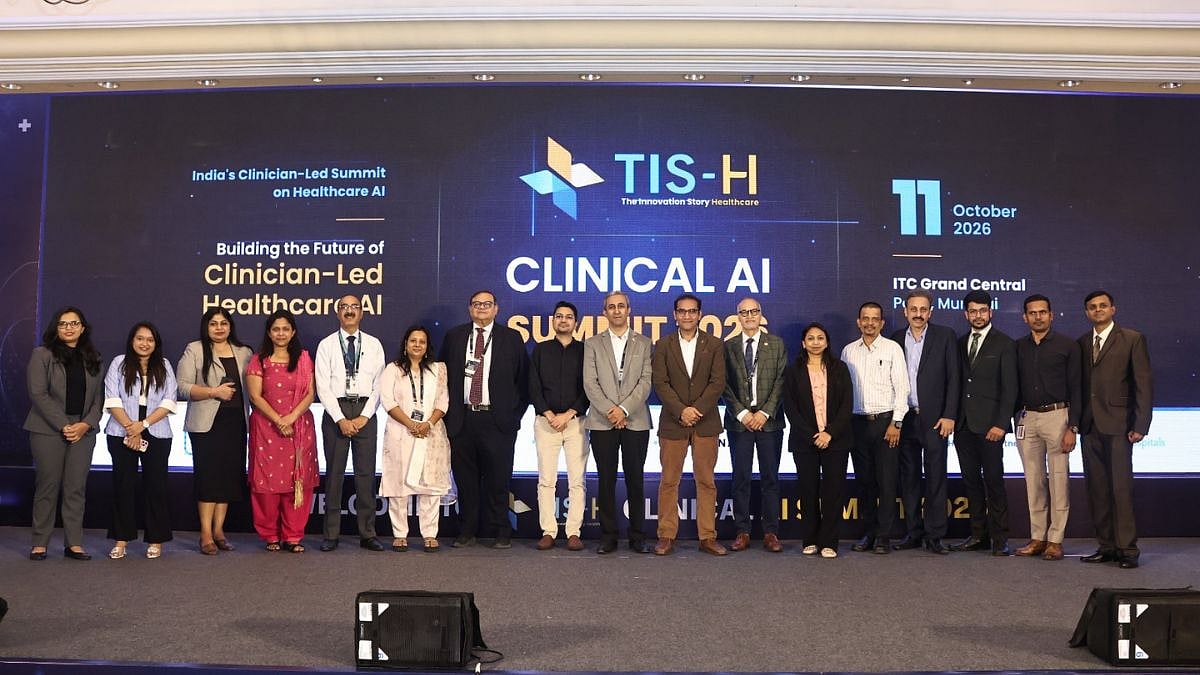
Mumbai Summit Urges Clinical Validation Before Hospital AI Adoption
News Summary

Mumbai Summit Urges Clinical Validation Before Hospital AI Adoption

The TIS-H Clinical AI Summit 2026, convened in Mumbai in October 2026 by the healthcare initiative of The Innovation Story, brought clinicians, hospital administrators, healthcare AI startups and technology experts together to examine the terms of hospital AI adoption. Participants held that strong results during technology development do not guarantee clinical reliability, and that accuracy, safety and effectiveness across patient conditions must be established before routine use. Speakers including Dr Meera Santosh and Dr Bipin Chevale of Gleneagles Hospital Mumbai, and Meenal Majumder of The Innovation Story, placed clinical validation, patient-data privacy and clinician oversight ahead of deployment speed.

Curated by IAICA Editorial Desk Read Analysis →

New Framework Quantifies the Human Oversight Gap in Cardiovascular AI
News Summary

New Framework Quantifies the Human Oversight Gap in Cardiovascular AI

The Journal of Medical Systems has published a commentary proposing a task-level oversight-margin framework for cardiovascular artificial intelligence. Authored by Aykan Çelik of Izmir Katip Celebi University's Ataturk Training and Research Hospital in Türkiye, the comment article argues that human-in-the-loop oversight fails when algorithmic output outpaces human cognitive capacity, and defines the oversight margin as the quantifiable buffer between the supervision an AI-assisted task demands and the overseer's capacity to provide it. The analysis connects directly to the European Union's Artificial Intelligence Act, Regulation 2024/1689.

Curated by IAICA Editorial Desk Read Analysis →

Adult-Only AI Biopsy Model Accurately Diagnoses Paediatric Coeliac Disease
News Summary

Adult-Only AI Biopsy Model Accurately Diagnoses Paediatric Coeliac Disease

A deep learning model trained exclusively on adult duodenal biopsies has diagnosed coeliac disease in children with near-perfect accuracy, including on slides from hospitals and scanning equipment it had never encountered. The study, published in eClinicalMedicine, addresses a persistent concern in medical AI: that tools validated only on adult data will underperform in paediatric populations. It follows earlier multicentre work by the same team showing expert pathologist-level accuracy in adults, and arrives as paediatric screening programmes expand. Children remain substantially underrepresented in medical AI development, and histological assessment of duodenal biopsies is known to show marked interobserver variability.

Curated by IAICA Editorial Desk Read Analysis →
Readily Raises $11 Million Series A to Scale AI Healthcare Compliance Platform
News Summary

Readily Raises $11 Million Series A to Scale AI Healthcare Compliance Platform

The San Francisco healthcare compliance technology company Readily has raised $11 million in Series A funding led by Define Ventures, with participation from Y Combinator and the California Health Care Foundation Innovation Fund. The capital will extend an AI-enabled platform that maps regulatory change to internal policies, assigned responsibilities, audits and supporting documentation, and will fund broader enterprise oversight capabilities. The announcement coincides with rising compliance costs and enforcement activity among healthcare payers, and with a pilot collaboration involving L.A. Care Health Plan.

Curated by IAICA Editorial Desk Read Analysis →

Czech Survey Finds One-Third of Adults Use AI for Mental Health Support
News Summary

Czech Survey Finds One-Third of Adults Use AI for Mental Health Support

Czech Health Ministry findings from a PAQ Research survey of more than 1,700 people show that one-third of respondents used artificial intelligence to discuss their mental health in the previous month, exceeding half among younger respondents. Reported uses centered on stress management, information seeking and understanding psychological difficulties. The ministry will develop public and professional recommendations through a project running until 2028, positioning AI as a complement to qualified care while flagging risks around unreliable advice, privacy and treatment decisions.

Curated by IAICA Editorial Desk Read Analysis →

Methodological Transparency Notice: Research briefs and analyses published here represent working papers, literature syntheses, and news commentaries for discussion and risk evaluation. They do not constitute formal medical device certification or clinical prescription.